Awareness raising is one of the strategies that is utilised by the organisation to disseminate information to communities. Awareness raising is done through community dialogues, Information Education Communication (IEC) materials and the media to empower women and girls with knowledge on GBV. Capacity building is also another strategy used to empower communities. WAG builds the capacity of Community Champions on GBV. Building the capacity of community cadres promotes local activism and assists in sustaining WAG programmes.
Psychosocial support is another strategy that is utilised by WAG to assist survivors of GBV to deal away with traumatic experiences of GBV and move on with their lives. The organisation offers free counselling services to survivors of GBV.
WAG in partnership with the Safe Abortion Action Fund (SAAF) is also providing financial support to survivors of sexual abuse for transport, food and Ultra Sound scan to ensure that women and girls access safe and legal termination services guided by the Termination of Pregnancy Act (ToP) of 1977. Referrals is another strategy used by WAG in its programming. WAG refers GBV cases that require legal aid, child protection or survivors who need temporary shelter to other stakeholders for further assistance.
Best Practices
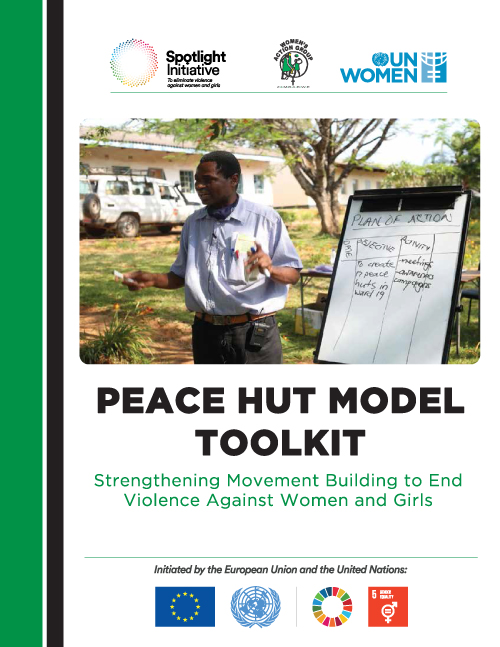
WAG in partnership with the Innovators Against Gender Based Violence and Community Based Organisations came up with an innovation during the implementation of the UN Women Spotlight Initiative (2019-2022) named the Peace Hut model. The Peace Hut Model addresses GBV and harmful practices (HPs) at community level as well as building a movement for ending violence against women and girls (VAWG). Community Based Organisations started setting up Peace Huts at community level as safe spaces for women and girls and other vulnerable groups to access information, report GBV, find solutions to address GBV and refer cases to GBV service providers for further support and response. Several cases of GBV including harmful practices were brought out through the Peace Huts and by the end of 2022, 183 Peace Huts were set up at village level across the three Districts of Buhera, Mutasa and Chipinge. WAG further developed and refined the Peace Hut model into a toolkit that can be adopted for learning and reference during setting up of Peace Huts by any district or organization who wants to adopt such a similar concept.
Project Information